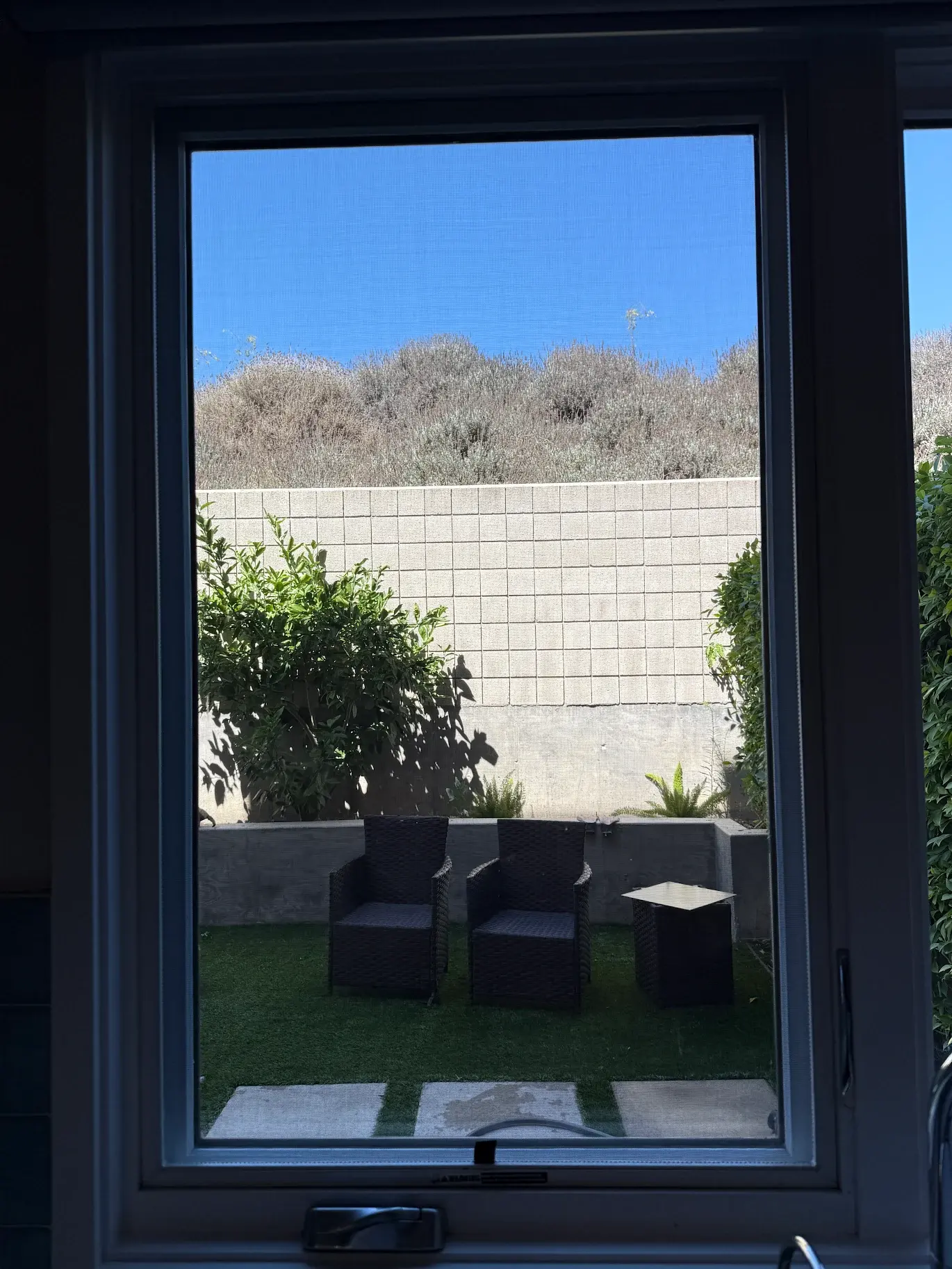
Some doorways deserve better than a permanent screen panel. A view-facing slider in Del Mar, a French-door entry in Newport, a front door that's the first thing every guest sees — putting a fixed frame of mesh across those all year is functional, but it's a compromise. The retractable screen is the no-compromise version: full insect protection when you want it, and nothing at all when you don't.
The mechanics, in one paragraph
A retractable screen lives rolled around a spring-loaded shaft inside a slim vertical housing mounted to the door jamb. Pull the leading rail across the opening and mesh unrolls with it, riding in low-profile top and bottom tracks; the rail latches (or, on double systems, meets its twin magnetically in the middle) and the doorway is sealed against insects. Release it and the screen glides back into its housing — speed-controlled on the systems we install, so it retracts with a civilized hiss rather than a slam. Rolled away, the mesh spends its life protected from the sun and weather that kill fixed screens.
Single door vs. double / French doors
A single-door system ($650 installed) covers any standard doorway with one housing and one pull. For French and double doors — the openings homeowners most want screened and the ones fixed panels serve worst — a double system ($1,100 installed) mounts mirrored housings on both jambs; the two panels pull across and meet magnetically at the center. Throw both doors open behind it and you get a six-foot column of moving evening air with nothing bug-shaped riding along — the single biggest airflow upgrade on our price list. If you only ever open one leaf of your French doors, say so: a single-side install is the cheaper right answer, and we'll recommend it ourselves at measurement.
Honest pros and cons
- Pro: invisible when stowed — the doorway and the view stay exactly as designed.
- Pro: mesh ages far slower than an always-exposed panel; nothing to walk into or for a dog to bounce off when retracted.
- Pro: custom-measured and color-matched housings read as part of the door frame.
- Con: more moving parts than a fixed screen — tracks want an occasional clean-out (about a minute; we show you at install).
- Con: real cost. If the doorway is a heavy dog-traffic route used with the screen deployed, pet-resistant fixed mesh may honestly serve you better — we'll say so.
Installation
A single system installs in about an hour, a double in under two — measured and fitted the same visit, tuned until the pull is light and the seal is tight, anywhere on our routes from San Diego to Sacramento. Like every job we do, it's covered by the fit-right guarantee: built to fit perfectly, or we come back and make it right. Curious whether your doorway qualifies? Send the form with "retractable" in the message and we'll take it from there.